Browse the latest Jobs in Malta here at Angel Jobs Malta, a trusted online job portal: New openings!
Angel Jobs Malta- your trusted job portal for real career opportunities
02-Sep-2026
If you're planning to work in Malta, you’re choosing one of Europe’s most attractive destinations for foreign professionals. The island nation continues to draw international talent because of its strong economy, growing industries, and stable employment environment.
If you’re an EU citizen, you can live and work in Malta freely without additional permits. If you’re a non-EU national, you must obtain a Single Work Permit before you can begin employment overseas. Once you start working, you will enjoy the same rights as everyone else, regardless of your nationality. Malta’s labour laws, governed by the Employment and Industrial Relations Act (EIRA), protect you by ensuring fair pay, safe working conditions, and equal treatment.
Through Angel Jobs Malta, a trusted online job portal, you can access verified job opportunities and connect only with legitimate employers. You will receive clear, step-by-step guidance throughout the Malta work permit process, making your transition smoother and more secure. Whether you want permanent employment or seasonal work, Malta offers a fair, safe, and welcoming environment for all employees.
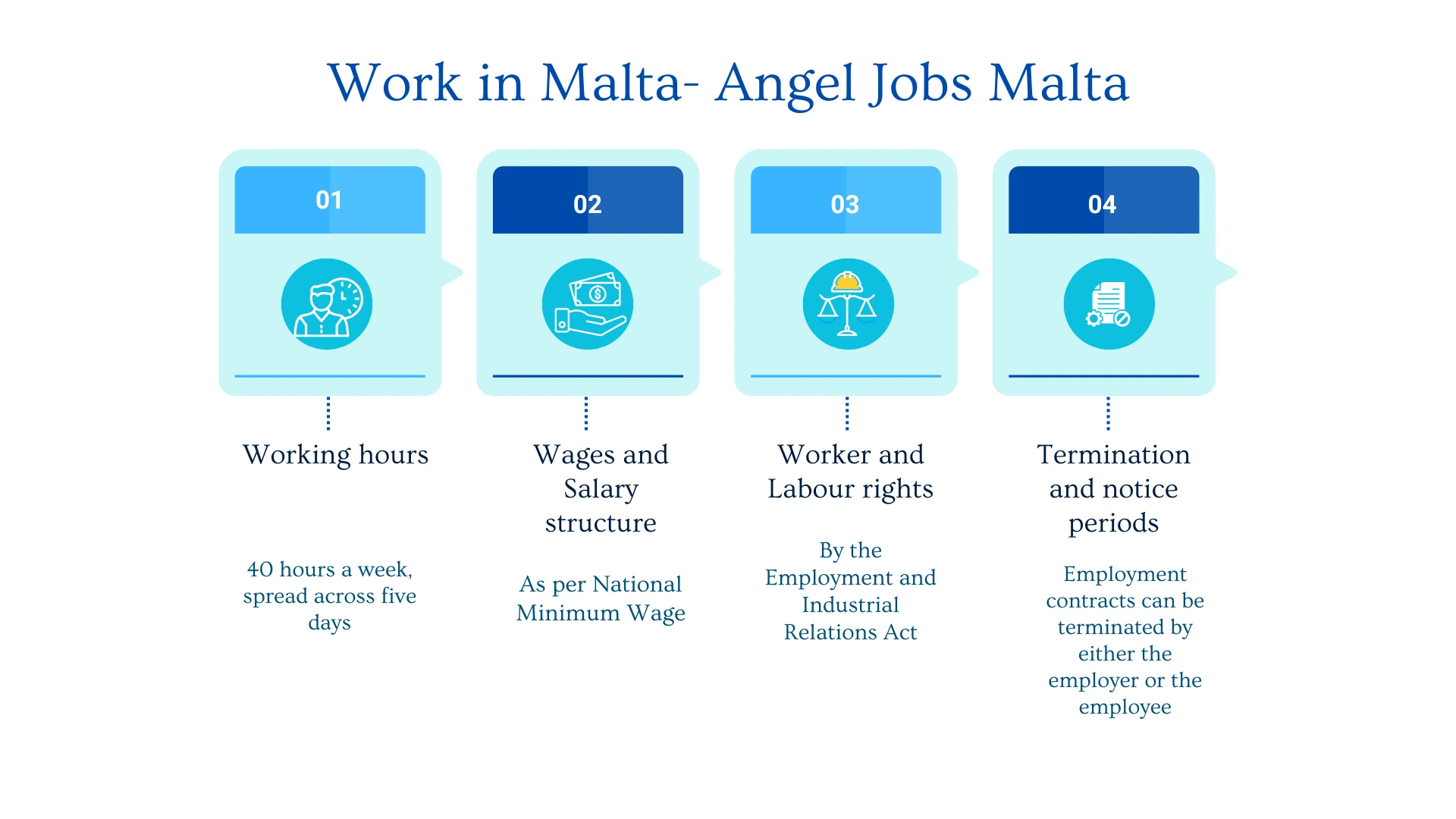
Working in Malta allows you to benefit from fair and transparent working conditions. If you work full-time, you will complete 40 hours a week, usually spread across five days. Maltese labour law also sets a maximum limit of 48 hours per week, even when overtime is included. You are also entitled to short breaks during your shift, adequate daily rest, and at least one day off every week.
Some sectors, such as hospitality, security, manufacturing, and healthcare, follow specific overtime rules set out in the Wage Regulation Orders (WROs). These may differ from general overtime arrangements, so you should always check the rules that apply to your industry.
You may choose to work more than 48 hours per week, but this must be voluntary. You must sign a written opt-out agreement if you decide to do so. You can withdraw your consent at any time, and your employer cannot pressure or force you into signing the contract. If you work at night, you cannot exceed an average of eight hours of night work within 24 hours. This average is calculated over a reference period of 17 weeks to ensure your safety, health, and overall well-being.
Malta’s wage and tax system is designed to promote fairness, transparency, and equal treatment for all workers. If you work in Malta, you will receive the same protection under labour law, whether you are an EU or non-EU employee. The national minimum wage, reviewed every year, applies to all full-time workers. Some sectors, such as healthcare, construction, and hospitality, offer higher salaries because they operate under specific collective agreements or Wage Regulation Orders (WROs). Your employer must also provide regular payslips and pay your wages through secure bank transfers to ensure full transparency.
If you apply for jobs in Malta through Angel Jobs Malta, you can trust that every salary detail, benefit, and employment condition is clearly presented. We verify each listing to ensure accurate information, allowing you to apply for jobs in Malta with confidence and clarity.
Malta follows a progressive tax system, which means the more you earn, the higher the tax rate applied to your income. You will also pay National Insurance (NI) contributions of around 10%, and your employer will match this amount. If you stay in Malta for more than 183 days, you become a tax resident. As a non-EU worker, you must register for a Tax Identification Number (TIN) to comply with local tax regulations.
In addition to your basic salary, Malta provides several statutory payments throughout the year:
You receive four mandatory payments annually:
These payments apply to both local and foreign employees and form an essential part of Malta’s wage structure.
You may also receive extra benefits depending on your sector, such as:
Malta’s structured salary system ensures that you understand how your earnings are calculated, how deductions work, and what additional payments you are entitled to receive. This clarity helps you plan your finances and gives you confidence that your rights as an employee remain fully protected.
When you work in Malta, your rights are fully protected under the Employment and Industrial Relations Act (EIRA). This law ensures that you receive equal pay for equal work and that you benefit from fair and safe working conditions. It also protects you from discrimination, unfair treatment, and wrongful termination.
Malta’s labour authority, the Department of Industrial and Employment Relations (DIER), enforces these rules. If you ever face a dispute or believe your rights have been violated, DIER can guide you through the official process and help you resolve the issue effectively.
Whether you come from an EU country or from outside the EU, you receive the same level of labour protection in Malta. You have the right to seek support, file a complaint, and request legal assistance if you experience any workplace-related concerns.
Employment contracts can be terminated by either the employer or the employee, but proper notice must be given based on the length of service. For jobs lasting less than a year, a one-week notice is required, while employees with over ten years of service must give up to twelve weeks’ notice. Every worker is entitled to receive final pay, unused leave, and any other outstanding benefits. Non-EU workers who work in Malta should note that termination or resignation may also affect their work permit status. They must inform Jobsplus immediately and, if they find new employment, apply for a new Single Work Permit under the new employer’s sponsorship.
If you’re working or planning to work in Malta, these official resources provide reliable information and assistance:
Whether you are an EU national enjoying freedom of movement or a non-EU professional working under a Single Work Permit, Malta provides a transparent and secure employment system. Its labour framework, based on Maltese law and EU employment standards, guarantees fair wages, reasonable working hours, and equal protection for everyone who chooses to work in Malta. Angel Jobs Malta, a trusted online job portal, connects international professionals with verified employers and genuine career opportunities, making it easier to start or advance your career in Malta’s thriving job market
Browse the latest Jobs in Malta here at Angel Jobs Malta, a trusted online job portal: New openings!
Angel Jobs Malta- your trusted job portal for real career opportunities