
News Articles
- Home
- News Articles
- Malta Employers Guide: Understanding the €4.66 Weekly COLA for 2026
News Articles
13-Oct-2026

For employers in Malta, keeping payroll updated is an important part of staying compliant with employment rules. One of the key wage changes for 2026 is the €4.66 weekly Cost of Living Adjustment (COLA).
But what does this increase actually mean for employers and employees?
Here is a simple breakdown of the 2026 COLA and what employers need to know.
The Cost of Living Adjustment (COLA) is a statutory wage increase linked to changes in the cost of living.
Under L.N. 290 of 2025 – Wage Increase (Employees) National Standard Order, 2025, wages of whole-time employees increased by €4.66 per week from 1 January 2026. The same Order sets out how the increase applies to part-time employees.
For a full-time employee, €4.66 per week is €242.32 over 52 weeks.
For employers, the main point is simple: the 2026 COLA needs to be reflected in employees’ wages from 1 January 2026, according to the applicable rules.
The increase applies to whole-time employees and is not limited only to employees earning the national minimum wage. DIER's examples also show how COLA is added to the basic wage when applicable.
This is particularly important where an employee's existing wage is close to the 2026 minimum wage.
COLA and the national minimum wage are connected, but they are not the same thing.
According to DIER, the 2026 national minimum wage for employees aged 18 and over is €229.44 per week for whole-time employment. DIER also provides examples showing how the COLA is applied when checking an employee's wage against the minimum wage.
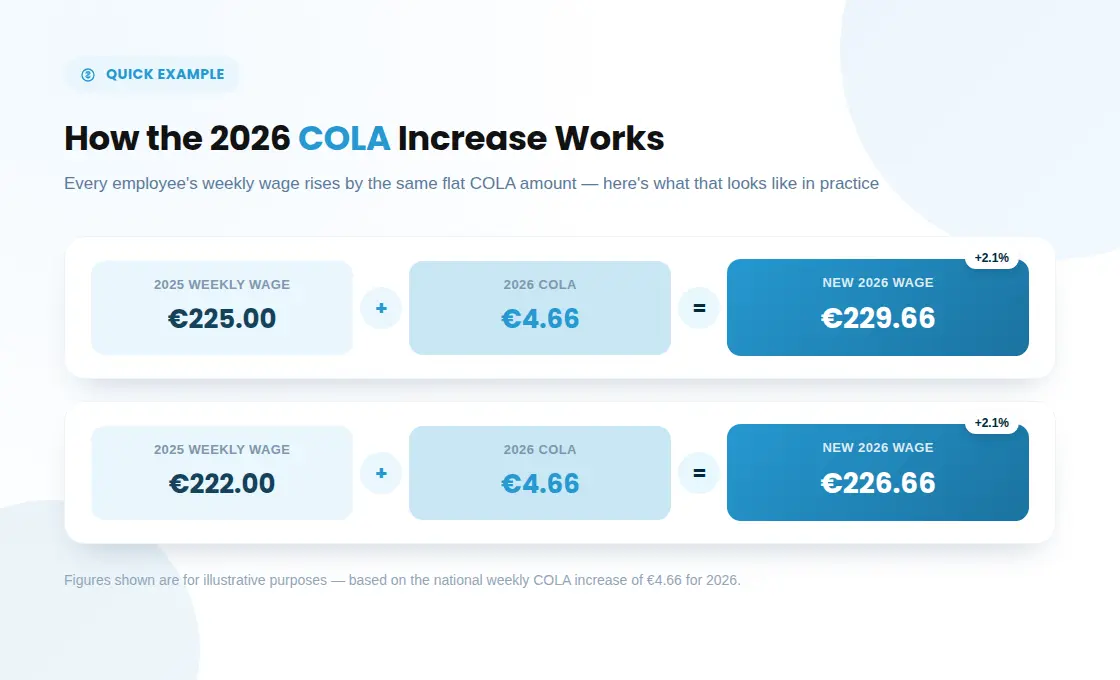
For example, an employee earning €225 per week in 2025 would reach €229.66 after the €4.66 COLA in 2026.
An employee earning €222 per week would reach €226.66 after the COLA, meaning an additional adjustment would be needed to reach the applicable minimum wage.
Part-time employees are also covered by the 2026 wage increase.
The Legal Notice states that the hourly increase is calculated based on the increase applicable to a comparable whole-time employee. Where there is no comparable category, the Order provides for calculation using one-fortieth (1/40) of the €4.66 increase, subject to the applicable rules.
For a standard 40-hour comparison, this works out to approximately €0.12 per hour.
For employees, the change means their applicable wage should reflect the statutory 2026 increase.
If you are a full-time employee, the standard COLA increase is €4.66 per week. For part-time employees, the increase is calculated according to the applicable methodology rather than simply adding €4.66 to weekly pay.
Employees earning close to the minimum wage should also check whether their total applicable wage meets the 2026 minimum wage requirements.
If you are an employer in Malta, it is useful to check:
✓ Have the 2026 COLA adjustments been reflected in payroll?
✓ Have part-time employees been calculated using the correct method?
✓ Are employees receiving at least the applicable minimum wage?
✓ Does a sector-specific WRO apply to your employees?
✓ Are payroll records and payslips showing the correct wage amounts?
DIER notes that sectoral minimum wages can apply depending on the economic activity of the employer, so employers should check the relevant WRO where applicable.
The €4.66 figure is the 2026 COLA increase, while the national minimum wage is a separate requirement.
For 2026:
Understanding the difference between COLA, minimum wage and sectoral wage requirements can help employers manage payroll correctly and help employees understand what should appear in their wages.
Keeping up with employment rules is only one part of hiring. Employers also need to reach candidates with the right skills and experience.
If you are hiring in Malta, you can post your vacancy on Angel Jobs Malta and connect with candidates looking for employment opportunities across Malta.
Employment and wage requirements may vary depending on the employee, role and applicable Wage Regulation Order. Employers should check the latest information from DIER and Maltese legislation before making payroll decisions.
Official sources used for this article:
Connect with qualified candidates and streamline your recruitment process with Angel Jobs Malta. Post your vacancy today and reach the talent you need.